
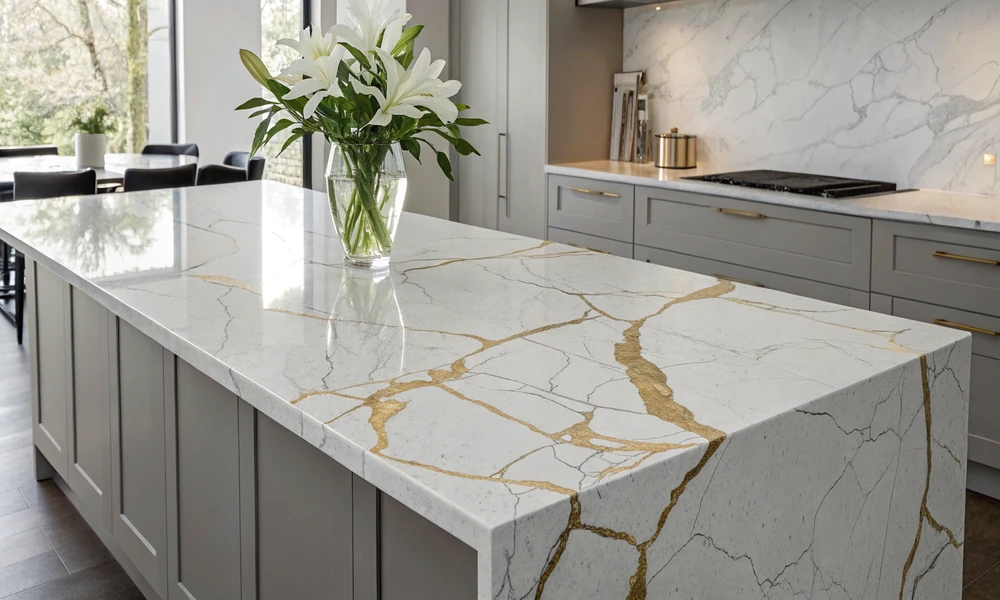

Quartz countertops promise modern elegance, but how do they really stack up against traditional natural stones like granite and marble? With so many myths around durability, cost, and maintenance, it can be tough to separate fact from marketing. Here’s what you need to know before making your countertop decision.
Debunking the Myth: Quartz Counters Are Not Truly Natural Stone
Quartz often gets grouped in with natural stones, yet its origins are distinct. Unlike granite or marble that are cut directly from the earth, quartz slabs are engineered. They blend natural quartz crystals with resins and pigments, compressing them into durable, non-porous surfaces. This engineered process results in a countertop that mimics natural stone’s beauty while offering modern performance benefits.
The mix of minerals and binding agents gives quartz unmatched consistency in color and pattern, something pure natural stone rarely achieves. The result? A surface that resists cracks and stains better than many traditional options.
But some homeowners worry about “synthetic” materials. While it is true that quartz isn’t quarried in single blocks like granite, its manufactured composition is a major reason for its long-term resilience. Pioneers in this field, such as Quartz Blanc, are known for their expertise in crafting these advanced surfaces.
Granite Is Always Cheaper Than Quartz – Fact or Fiction?
Sticker shock is common when evaluating stone countertops. Is granite the budget-friendly champion? Not necessarily. Price depends on stone quality, installation complexity, and project size.
| Material | Average Cost (per sq. ft.) | Installation Complexity | Maintenance Needs |
|————–|—————————-|————————|——————-|
| Granite | $40 – $100 | Moderate | Requires sealing |
| Quartz | $55 – $120 | Moderate | Low |
| Marble | $60 – $150 | Higher | High |
| Porcelain | $70 – $130 | Higher | Low |
Although granite sometimes comes in cheaper, premium varieties or intricate installations can flip the cost equation. Quartz provides predictable pricing due to its uniformity and quick fabrication. For small projects, granite may win on price, but for custom jobs or large spaces, quartz’s durability and minimal upkeep can mean better value over decades.
Natural Stones Like Marble Are Too Fragile for Everyday Use
Marble’s reputation for elegance is matched only by its supposed fragility. Is it really too delicate for high-traffic kitchens? The answer is nuanced. Marble is softer and more porous than granite or quartz, meaning it can scratch or stain if not properly sealed and maintained. Yet, with recent advancements in sealing technology and surface treatments, marble can serve beautifully in both kitchens and bathrooms.
Quartzite, another natural stone, offers similar veining to marble but with the toughness of granite, a great compromise for those craving luxury without the worry. Modern sealants have come a long way, allowing even traditionally sensitive stones to withstand the demands of family life.
Porcelain and Quartz Deliver the Same Look and Durability as Natural Stone
Porcelain and quartz both bridge the gap between visual appeal and modern performance. Still, their characteristics differ in subtle but important ways. Quartz excels in color consistency, scratch and stain resistance, and is warmer to the touch. Porcelain, on the other hand, is ultra-thin, UV resistant, and can be used outdoors, a feat most quartz and natural stones cannot match.
For waterfall islands or seamless wall installations, both materials shine. However, porcelain’s hardness can make installation more challenging, requiring specialized tools and expertise. Quartz provides a slightly easier fabrication process and is less prone to edge chipping during installation.
All Countertops Require High Maintenance and Are Prone to Staining
Many believe stone countertops are a chore to maintain. The truth depends on your material. Quartz and porcelain both require little more than a wipe with soap and water, no annual sealing or special cleaners needed. Granite demands periodic sealing to repel stains, while marble needs extra vigilance against acids and oils.
When it comes to heat resistance and scratch toughness, granite and quartzite outpace marble, but quartz and porcelain hold their own admirably for daily use. The myth that all countertops are high maintenance simply doesn’t hold up with today’s engineered surfaces.
Installation Speed and Quality Are Compromised When Opting for Budget Materials
Fast installation often raises red flags about quality, but with the right provider, quick turnaround and excellence can go hand in hand. Custom fabrication, seamless waterfall edges, and book-matched surfaces are now achievable within days, not weeks, especially with dedicated specialists.
Professional installation matters far more than just the price of the stone. Precision measurements, seamless joints, and expert polishing ensure both the look and longevity of your countertop. Quality materials are important, but skilled installation is the real secret to lasting performance.
Choosing the Right Countertop Is Just About Looks
A beautiful counter is only part of the decision. Functionality, resistance to wear, warranty coverage, and even the environmental impact of your material should weigh in. Trusted suppliers offer certifications (like NSF for food safety) and robust warranties (some up to 25 years), providing peace of mind with your investment.
Guidance from seasoned professionals means your choice will fit both your design vision and your daily needs, turning a simple renovation into a true upgrade for your home. Ultimately, the best countertop balances looks, durability, care requirements, and expert support, ensuring your surfaces stay stunning for years to come.