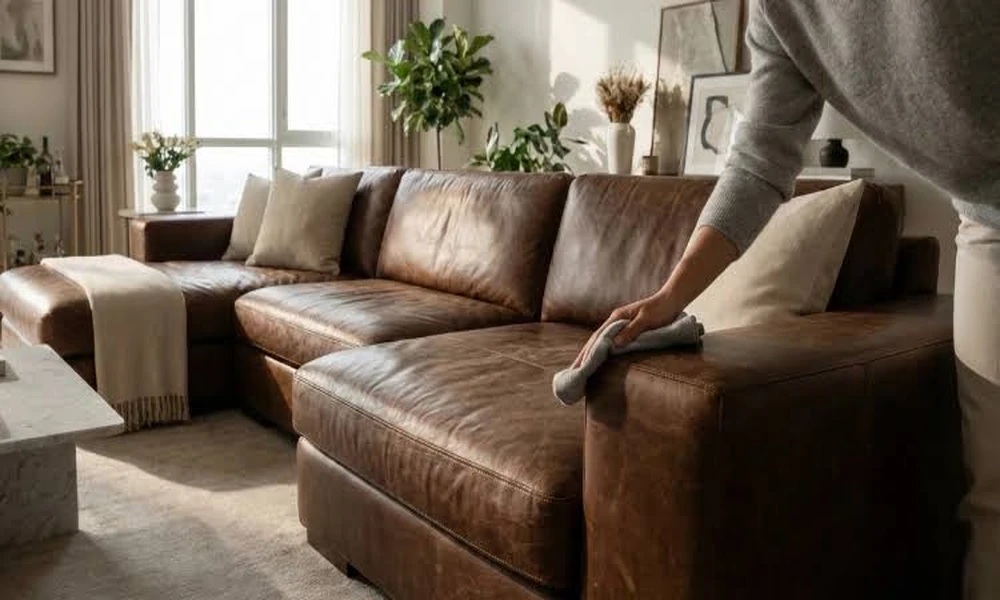

Leather cracks without care because its natural oils evaporate steadily from the surface. Hide stays flexible only while oils lubricate its fibre structure. Air conditioning, heating, and sunlight all speed the loss. Dry fibres stiffen first and split under flexing afterwards. Sitting flexes the same panels thousands of times yearly. Stiff panels crack exactly where flexing concentrates. Leather care schedules from brisbaneupholsterycleaning treat oil replacement as the core service. Cleaning alone removes soil while conditioning restores flexibility. Both stages together keep the hide supple across the years. Skipped conditioning shows as dullness before cracking starts. This means that dullness is an early warning sign that should be taken seriously. Care begun at dullness prevents the damage stage entirely.
How does soil damage the finish?
Soil damages leather by grinding the protective finish thin under every contact. Dust particles carry sharp mineral edges against the surface. Body oils mix with dust into an abrasive paste. Jeans dye and belt buckles add friction along the seat fronts. Finish wears thin where contact runs heaviest. Thin finish exposes raw hide that dries even faster. Regular gentle cleaning removes the abrasive layer before grinding advances.
- Weekly dust removal : Soft dry cloths lift surface dust from all leather panels. Crevices along seams collect grit needing careful attention. Vacuum brushes reach fold lines that fingers cannot. Weekly removal keeps the abrasive load near zero.
- Correct product choice: Leather-specific cleaners work without stripping protective finishes. Household detergents and wipes dry out severely. Alcohol-based products cause the exact damage they should prevent. Product choice decides whether cleaning helps or harms.
- Professional deep passes: Accumulated grime past home methods needs professional removal. Deep cleaning clears pores so conditioner absorbs properly. Cleaned hide accepts oils where sealed grime blocks them.
Ground-in soil left in place shortens every stage that follows. Removal keeps finishing thick and hides protected underneath. Seat fronts deserve the closest watching across every leather piece.
How does conditioning stop cracking?
Conditioning stops cracking because absorbed oils restore flexibility through the fibre depth. Conditioner returns exactly what daily conditions remove. Flexible hide bends with sitting instead of resisting it. Treatment every three to six months suits most homes. Air-conditioned rooms push intervals toward the shorter end. Sun-exposed pieces need the same tighter schedule.
Application technique shapes the result as much as frequency does. Thin even coats absorb fully, while thick coats sit sticky. Buffing after absorption restores the finished sheen. Seams and flex panels deserve extra attention every pass. Conditioned leather shows its state through soft, even lustre. Cracking on conditioned hide stays rare into old age.
What signals mean care is overdue?
Dullness, tightness, and fine surface lines signal that leather care is overdue. Healthy hide carries a soft, even sheen throughout. Dull patches show oils already running low. Squeaking or a tight feeling under the sitting means stiffness is arriving. Fine lines along seat fronts precede open cracking. Any signal caught early keeps treatment simple.
Checking takes one minute across each piece monthly. Bright side lighting reveals lines, flat light hides. Hand pressure tests panel flexibility directly. Colour variation between panels flags uneven drying. Early response to any signal returns hide to the condition. Progress toward damage was ignored, and no product was reversed.
Oil loss, abrasive soil, and skipped conditioning explain leather cracking completely. Each cause responds to one regular care habit. Cleaning removes the grinding layer while conditioning restores flexibility. Warning signals give households months of notice before damage. Leather maintained on schedule serves for decades, whereas neglected hide fails within years.